
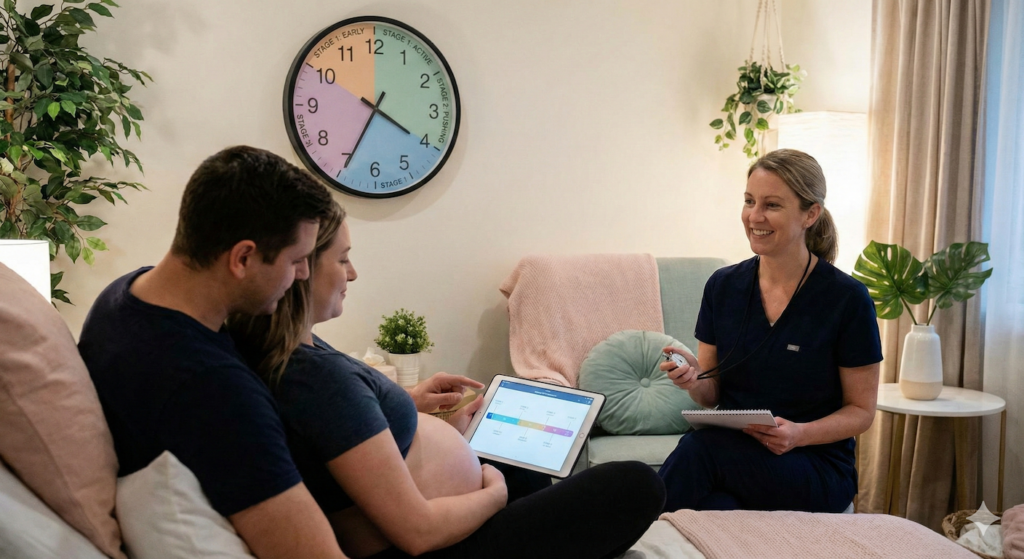
Did you know that labor durations can range from a few hours to several days, making it one of the most unpredictable parts of childbirth? This unpredictability can be a source of anxiety for many expectant mothers who wonder, “how long does each stage of labor last?” Understanding these stages can alleviate some of this anxiety by offering a clearer picture of what to expect.
For many, the prospect of labor brings with it a mix of excitement and apprehension. The uncertainty surrounding how long each stage will last only adds to this. That’s why we’ve created this comprehensive guide. By offering detailed insights into each stage of labor, we aim to provide you with the reassurance and preparedness you need for this incredible journey.
Table of Contents
- Understanding the Stages of Labor
- How Long Does the First Stage of Labor Last?
- How Long Does the Second Stage of Labor Last?
- How Long Does the Third Stage of Labor Last?
- Factors Influencing the Duration of Labor
- Conclusion
Understanding the Stages of Labor
Labor is the process through which a woman gives birth, marking the transition from pregnancy to motherhood. It consists of three main stages: early labor, active labor, and the delivery of the placenta. Each stage plays a crucial role in the childbirth process and varies in duration and intensity.
Early labor, the first stage, involves the initial dilation and effacement of the cervix. Active labor, which follows, is characterized by more intense contractions and further dilation. Finally, the delivery of the placenta completes the process.
How Long Does the First Stage of Labor Last?
Early Labor
Early labor is the longest phase of the first stage and can last anywhere from a few hours to several days. During this time, the cervix begins to dilate and efface, preparing for the baby’s passage. For first-time mothers, this stage often takes longer compared to those who have given birth before. Factors such as stress, fatigue, and the baby’s position can influence the duration.
Signs of early labor include mild to moderate contractions, backache, and the breaking of the water. It’s a time for the mother to stay calm, rest, and conserve energy for the more intense stages ahead.
Active Labor
Active labor marks the transition from early labor, with contractions becoming more frequent and intense. This phase typically lasts between 4 to 8 hours, although it can be longer or shorter depending on various factors. The cervix dilates from about 6 to 10 centimeters during this stage, and the mother will feel more pressure as the baby moves down into the birth canal.
Indicators that active labor is progressing include more intense contractions and a feeling of increased pressure. For more detailed guidance on transitioning from active labor, explore our Ultimate Guide to Understanding the Differences Between Active Labor and Transition.
How Long Does the Second Stage of Labor Last?
The second stage of labor involves the pushing phase and the actual delivery of the baby. This stage begins when the cervix is fully dilated and ends with the baby’s birth. For first-time mothers, this stage can last anywhere from 20 minutes to 3 hours, while experienced mothers may complete it more quickly.
Factors affecting the duration of this stage include the baby’s position, the mother’s energy levels, and the effectiveness of her pushing. It’s important for mothers to remain as relaxed as possible and focus on breathing and pushing techniques. For tips on managing this stage, consider our 7 Proven Tips for a Smooth Delivery Transition Phase.
How Long Does the Third Stage of Labor Last?
The third stage of labor involves the delivery of the placenta and is generally much shorter than the previous stages, lasting around 5 to 30 minutes. During this phase, contractions help separate the placenta from the uterine wall, allowing it to be expelled.
Post-delivery care is crucial, as it involves monitoring the mother for any signs of complications, such as excessive bleeding. Healthcare providers will ensure that both mother and baby are stable and healthy following the delivery.
Factors Influencing the Duration of Labor
Each woman’s labor experience is unique, with numerous factors influencing its duration. Individual variability, medical interventions like epidurals or inductions, the baby’s position, and whether it’s a first-time or subsequent birth all play a role.
According to the Mayo Clinic, interventions can either speed up or slow down labor, depending on the circumstances. Additionally, the position and size of the baby can affect how long each stage lasts.
Conclusion
While labor durations can vary significantly, understanding the typical time frames for each stage can provide comfort and preparedness. It’s important to remember that every labor experience is different, and what’s most important is the health and safety of both mother and baby.
We encourage readers to seek personalized information and support from healthcare providers. The expertise of medical professionals can offer reassurance and guidance tailored to individual needs.
Ultimately, labor is the beginning of a new and rewarding chapter in life, filled with joy and the promise of new beginnings.
For more information on managing anxiety during labor, explore our guide on managing anxiety during labor.