
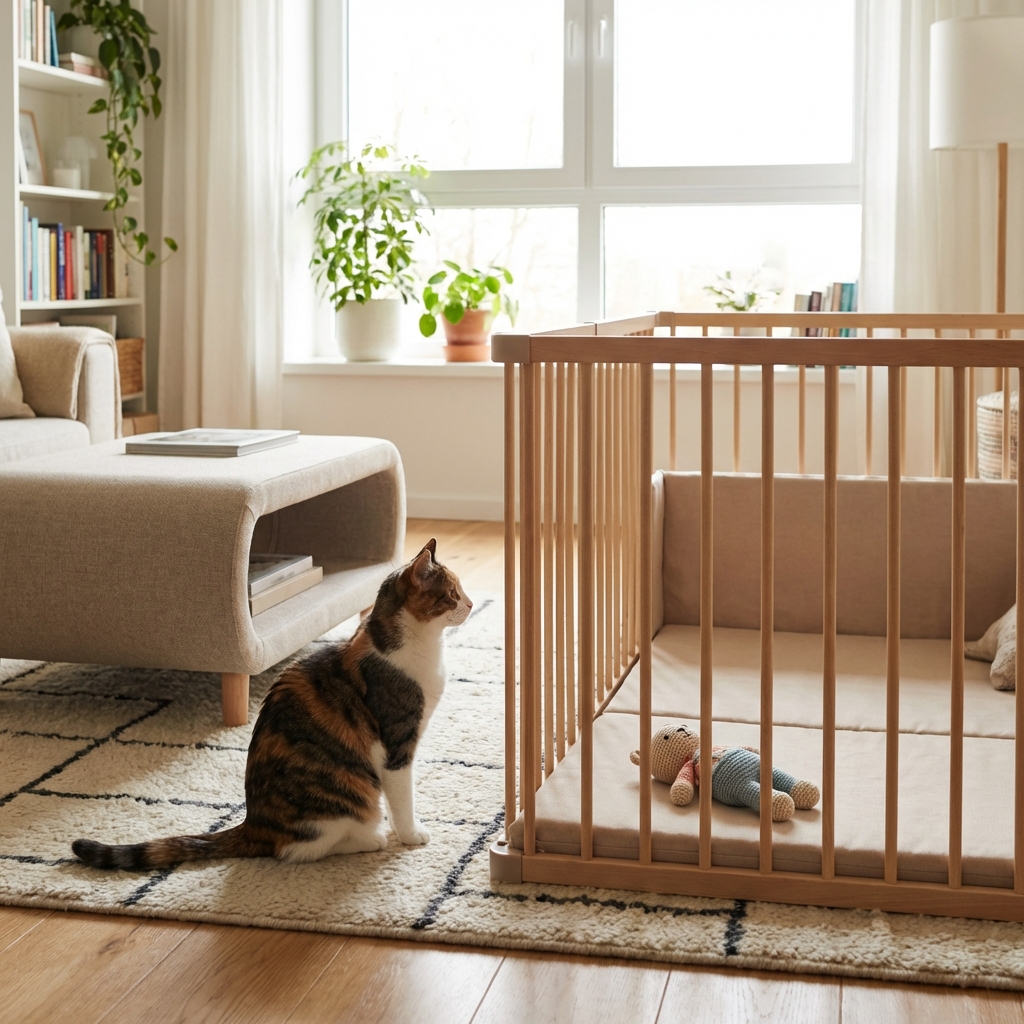
When a new baby arrives, there’s often a whirlwind of changes to your home environment. For families with cats, the challenge increases as you strive to create a safe space for both your baby and your feline friends. Cats are curious creatures and might unintentionally pose risks to your baby. The good news is, with some strategic planning, you can effectively baby-proof your home while ensuring your cat’s safety and comfort. In this blog post, we’ll explore seven proven tips for baby-proofing your home with cats.
Table of Contents
- Tip 1: Secure Hazardous Areas
- Tip 2: Create a Safe Play Area for Your Baby
- Tip 3: Manage Litter Box Accessibility
- Tip 4: Supervise Interactions
- Tip 5: Regularly Trim Your Cat’s Claws
- Tip 6: Maintain a Clean Environment
- Tip 7: Provide Attention and Comfort to Your Cat
Tip 1: Secure Hazardous Areas
First and foremost, identify and secure potentially dangerous areas in your home. Cats are agile and can easily access spaces that might be hazardous for a baby. Use baby gates to block off stairs and high-traffic areas. Consider installing door locks on cabinets containing cleaning supplies or sharp objects to keep both your baby and cat out of harm’s way.
Tip 2: Create a Safe Play Area for Your Baby
Designate a specific area in your home as a safe play zone for your baby. Use playpens or a baby-friendly mat to create a boundary. This not only helps in keeping your baby safe but also signals to your cat that this is a no-go zone. Ensure the play area is free from small objects that your cat might nudge within your baby’s reach.
Tip 3: Manage Litter Box Accessibility
One important aspect of baby-proofing with cats is managing the litter box. Place the litter box in a location that is accessible to your cat but out of your baby’s reach. Consider using a gate or barrier to block the area or invest in a litter box with a cover. This prevents your baby from getting into the litter while maintaining privacy for your cat.
Tip 4: Supervise Interactions
Never leave your baby alone with your cat unsupervised. While most cats are gentle and curious, they may not understand how fragile a baby is. Always supervise interactions to ensure that the baby is safe and the cat doesn’t feel threatened. Gradually introduce them and allow your cat to get used to the baby’s presence in a controlled manner.
Tip 5: Regularly Trim Your Cat’s Claws
Keeping your cat’s claws trimmed is crucial to prevent accidental scratches. A cat’s natural instinct to knead or play could inadvertently harm your baby. Regularly trimming their claws reduces the risk and keeps both your baby and cat safe. If you’re unsure about how to trim your cat’s claws, consult your veterinarian for guidance.
Tip 6: Maintain a Clean Environment
Cats are known for their cleanliness, but they can still carry around dirt and allergens. Regularly clean your home to reduce allergens and maintain a healthy environment for your baby. This includes vacuuming fur, washing your cat’s bedding, and keeping toys clean. A clean home minimizes the risk of allergies and infections for your baby.
Tip 7: Provide Attention and Comfort to Your Cat
With a new baby in the house, it’s important not to neglect your cat’s needs. Ensure your cat still receives attention and comfort to prevent feelings of jealousy or stress. Spend quality time with your cat, provide them with toys, and maintain their routine as much as possible. A happy cat is less likely to act out or become aggressive, thus ensuring a harmonious home environment.
Conclusion
Bringing a baby into a home with cats requires some thoughtful changes, but with these seven proven tips, you can create a safe and harmonious living space for both your baby and your feline friends. Remember, preparation and supervision are key to ensuring that everyone coexists peacefully. With patience and care, your family and your cat can enjoy this new chapter together.